Best Reading and Comparing Solar Quotes in Austin, TX: How to Choose
Finding the best reading and comparing solar quotes in Austin, TX help is mostly about knowing what to look for before anyone sits at your kitchen table. Two quotes for the same roof can differ by thousands of dollars, and the difference usually hides in equipment, warranty terms, and the assumptions behind the savings math. This guide covers what separates a careful quote review from a sales pitch, what drives cost in the Austin area, the questions worth asking, and the warning signs that should end a conversation. By the end you will know exactly how to judge a quote on its own merits, whichever utility sends your bill.
Best Practices for Reading and Comparing Solar Quotes in Austin, TX
If you are comparing the best reading and comparing solar quotes in Austin, TX has on offer, the good ones share a short list of checkable habits. None of these require you to trust anyone's word.
- They put everything in writing before you sign. System size in kW, panel and inverter models, battery capacity if one is included, total price, and a line-item breakdown. A quote that only shows a monthly payment is hiding the number that matters. Our breakdown of solar quote line items walks through what each line should say.
- They model your actual utility, not a generic one. The utility, not the town, decides your outcome. Austin Energy pays through its Value of Solar tariff. Pedernales Electric Co-op, Oncor retail-choice plans, Georgetown Utility Systems, and Bluebonnet each handle export credits differently. A quote that assumes full net metering everywhere is wrong somewhere.
- They carry the license and insurance the work requires. In Texas that means a licensed electrician on the permit and general liability coverage. Ask for proof; a competent outfit hands it over without friction.
- Their production estimate is conservative and sourced. Good quotes name the modeling tool, the shading assumptions, and the panel degradation rate. A production number with no method behind it is a guess dressed up as a promise.
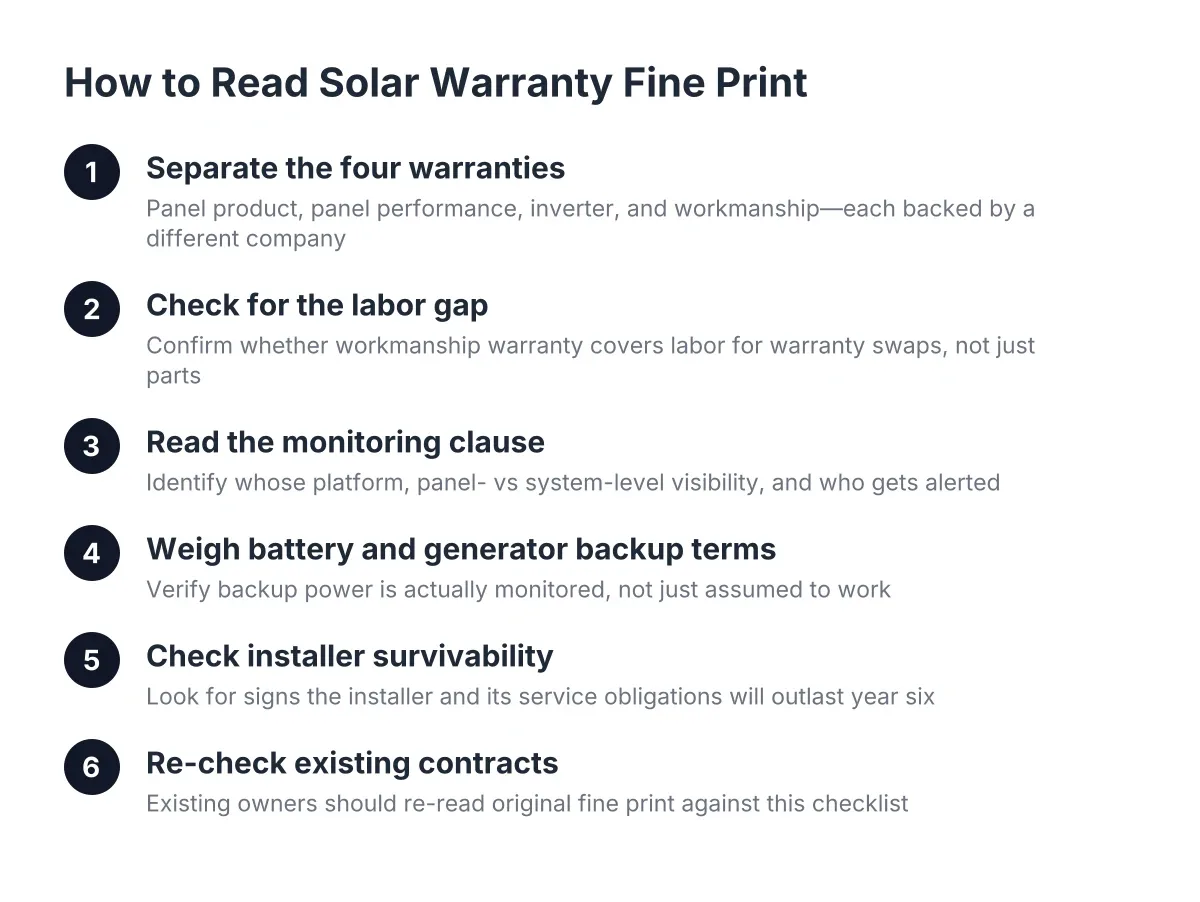
- Their warranty terms are specific. Who covers labor for a failed inverter in year eight, for how long, and who you call. "25-year warranty" alone tells you nothing about workmanship versus manufacturer coverage.
- They will say no. An honest quote sometimes concludes that your roof, your shade, or your utility's buyback makes solar a poor fit. A company that has never talked anyone out of a system is selling, not advising.
How to Evaluate the Cost of Best Reading and Comparing Solar Quotes in Austin, TX
This site does not quote prices, and you should distrust any page that gives you one number for a city of about 974,447 people. What we can tell you is what moves the number on your roof.
Price per watt rises with roof complexity, steep pitches, multiple small roof planes, and older electrical panels that need upgrading. The typical Austin home was built around 1994, per U.S. Census Bureau ACS estimates, so many houses here predate modern panel capacity and some quotes will carry a main panel upgrade line. That line is not padding if your panel genuinely needs it; ask the installer to show you why.
Batteries change the math more than anything else. A home battery can double a project's cost, and whether it pays depends on your utility's export credit, not on the battery itself. In Austin Energy territory the Value of Solar tariff credits all production at a set rate; in Oncor retail-choice areas your buyback depends on the plan you choose. Same hardware, different payback.
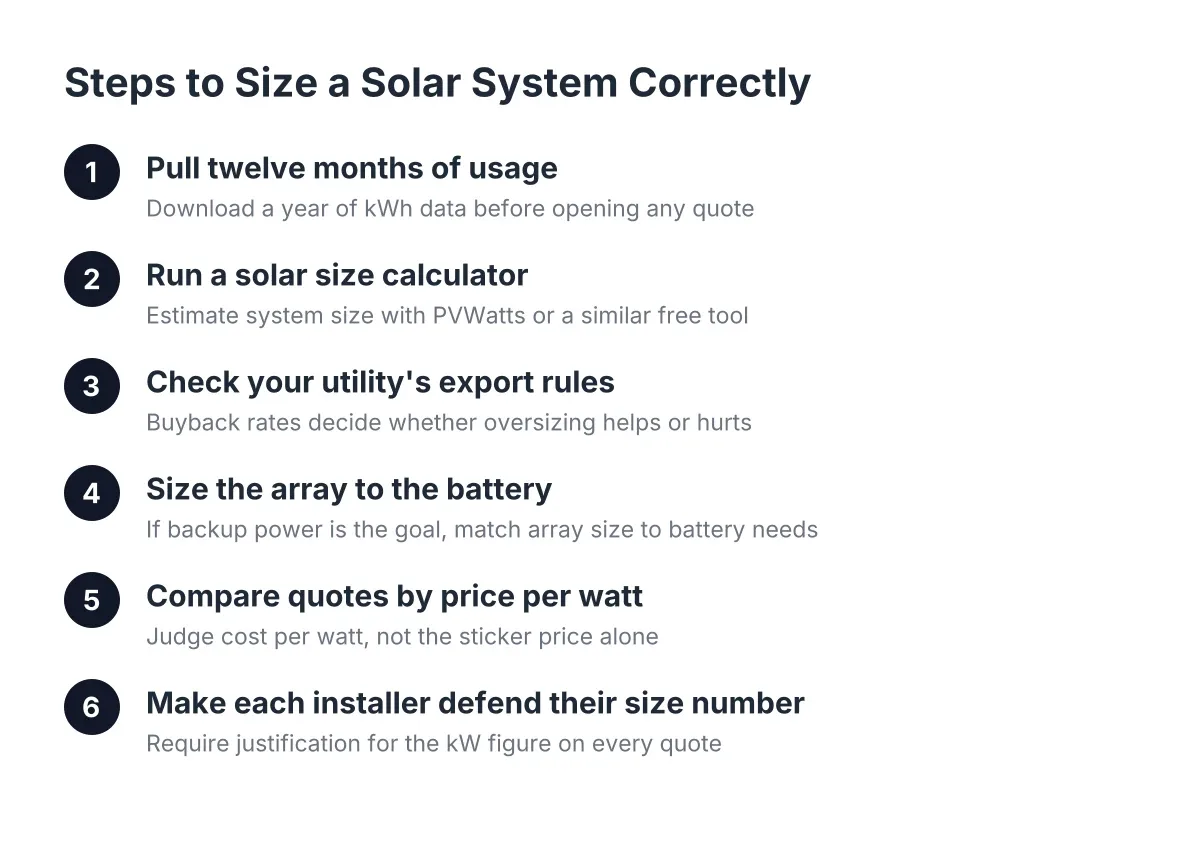
The cheapest bid is often the expensive choice. Low bids commonly cut the inverter quality, skip the racking details, or bury dealer fees inside a loan. Those fees can add 20 to 30 percent to a financed price without appearing anywhere on the quote; our guide to hidden fees in solar quotes lists eight places they hide. To compare apples to apples, divide each cash price by system wattage, confirm every quote uses the same battery assumption, and ask each bidder for the cash price even if you plan to finance. The gap between cash and financed price is the dealer fee, dated and visible.
Any dollar figure anyone gives you should carry an as-of date. Rates, rebates, and tariffs in this market change yearly. Your numbers will differ from your neighbor's.
Questions to Ask Before You Hire
- Which utility serves my address, and how did you model its export credit? A good answer names the utility and the specific tariff or plan. A bad answer says "net metering" without qualification.
- What is the cash price, and what is the financed price? A good answer gives both numbers in writing. The difference is the dealer fee, and an honest installer admits it exists.
- Who holds the electrical license on this job? A good answer names the licensed electrician and offers the number for verification. Hesitation here is disqualifying.
- What does your workmanship warranty cover, separate from the manufacturer's? A good answer specifies years, what labor is included, and whether roof penetrations are covered.
- What production did you model, and with what tool and shading assumptions? A good answer names the software and walks you through the shade analysis for your specific roof.
- What happens if the company closes before the warranty ends? A good answer explains manufacturer-direct claims and any third-party workmanship backing. "That won't happen" is not an answer.
- Can I see the full contract before the deposit? The only good answer is yes. The five numbers that predict your payback should all be visible in that document.
Red Flags That Should End the Conversation
- No license or insurance documents on request. This is a two-minute ask for a legitimate contractor. Refusal or delay ends the conversation.
- A quote that only shows a monthly payment. The total price, the dealer fee, and the interest terms exist. If the salesperson will not show them, they are the problem.
- "This price expires tonight." Equipment and labor costs do not change by the hour. Manufactured urgency exists to stop you from getting a second quote.
- Savings claims based on net metering your utility does not offer. If someone tells a Pedernales Electric Co-op or Bluebonnet member they will get full retail credit for exports, the rest of the quote deserves no trust either.
- Vague scope. "Solar system, installed" is not a scope of work. Panel count, model numbers, inverter type, and attachment method belong in writing.
- Pressure to sign at a door-to-door visit. A solar contract is a 25-year decision on a home; in Austin the median home value runs around $555,300, per U.S. Census Bureau ACS estimates. No decision of that size happens on a doorstep.
Reading and Comparing Solar Quotes Questions Austin, TX Homeowners Ask
What is the 33% rule for solar panels?
There is no official 33% rule; it is shorthand some salespeople use for sizing or savings claims, and the definition shifts depending on who is selling. Treat any percentage rule in a pitch as a prompt to ask for the actual math. What matters is your modeled production, your utility's export credit, and your real usage, all in writing.
Is there still a 30% solar tax credit in 2026?
The federal purchase credit under Section 25D has ended for homeowner-owned systems, so a 2026 quote that applies a 30% purchase credit to a cash or loan deal is using stale math. A lease credit path under Section 48E survives for third-party-owned systems, where the leasing company claims the credit and may pass some value through. Ask any bidder to show which credit their numbers assume and its as-of date; your numbers will differ.
What is the 20% rule for solar?
Like the 33% rule, the 20% rule has no standard definition. Some use it for oversizing limits, others for a minimum savings threshold. If a quote leans on it, ask the installer to define the rule, show the source, and apply it to your specific bill and utility. A rule that cannot survive that question was never a rule.
Service Areas
This guide covers the whole Austin region, because the same quote-reading skills apply wherever you live. That includes Round Rock, Cedar Park, Georgetown, Pflugerville, Leander, Kyle, Buda, San Marcos, Hutto, Dripping Springs, Lakeway, Bee Cave, and Bastrop, TX. The utility territory, from Austin Energy to Georgetown Utility Systems, matters more than the town line, so check which one bills you before comparing anything.
Get a Quote You Can Judge
You now know what the best reading and comparing solar quotes in Austin, TX reviewers look for: written scope, named equipment, a sourced production model, and utility math that matches your actual bill. Gather at least three written quotes, put them side by side with the questions above, and contact us if you want a plain-English second opinion on what the fine print says. The glossary of quote terms is a good companion while you read.
For help with reading and comparing solar quotes, Austin Solar FAQ is the place to start.
Related guide: Reading and comparing solar quotes — Complete Guide
Prefer to talk it through? Call +15125571906 — a quick call is usually the fastest way to get a straight answer for your situation.